No, Printago Is Not Going to Scan Your Files for Guns
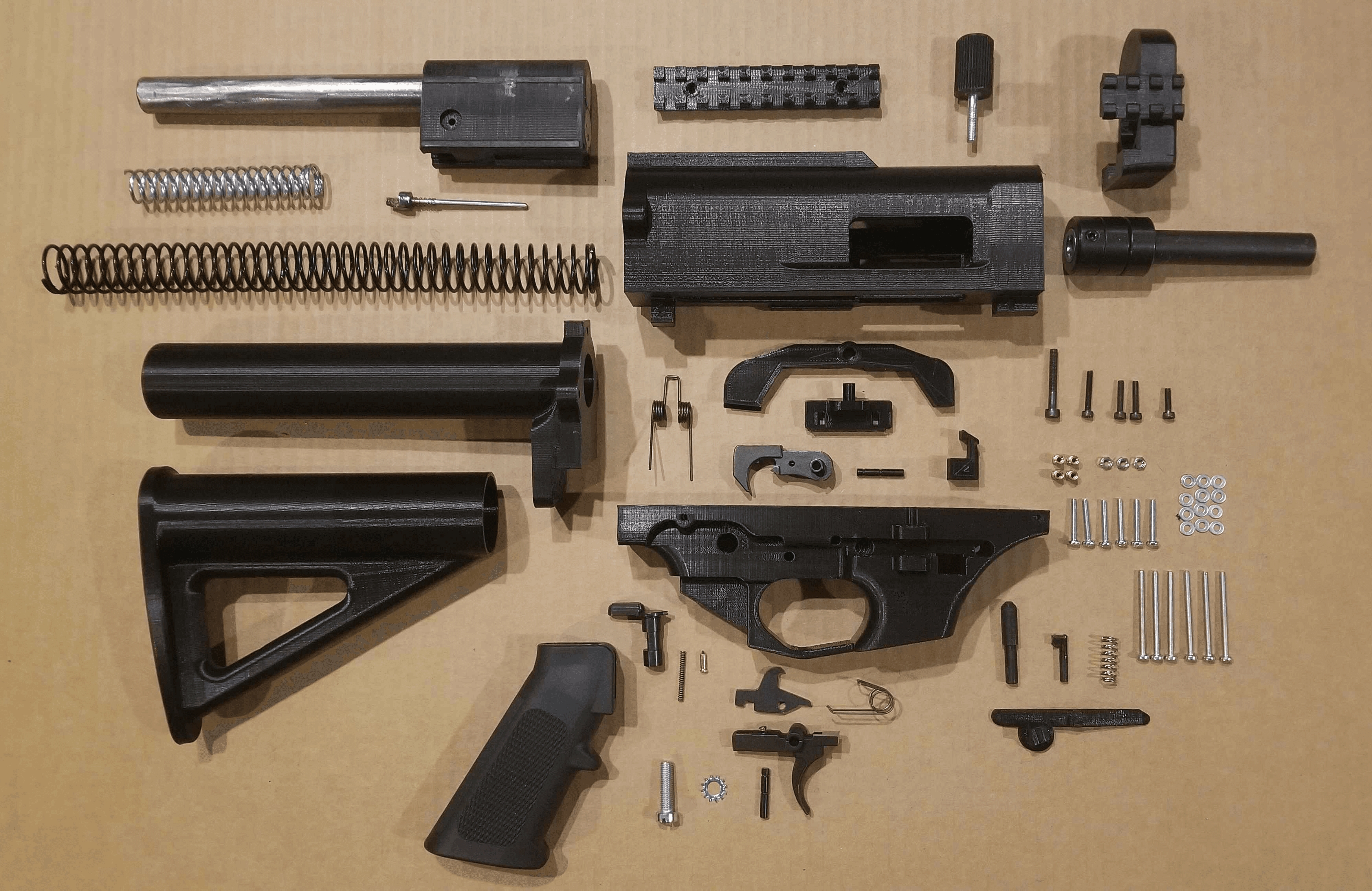
Printago's Position on Print File Scanning, AI Detection, and User Privacy
There's been a lot of conversation in the 3D printing community lately about AI-powered file scanning, government-mandated "blocking technology," and whether print farm management platforms should be monitoring what their users print. We want to be transparent about where Printago stands on all of this.
The short version: We don't scan your files. We don't monitor what you print. We have no plans to change that.
Now here's the longer version.
What's Happening Right Now
If you haven't been following the news, here's a quick overview of the regulatory and industry landscape as of early 2026.
In the United States, New York Governor Kathy Hochul has proposed first-in-the-nation legislation that would require all 3D printers sold in the state to include "blocking technology" capable of scanning every print file through a "firearms blueprint detection algorithm." The bill would also criminalize the unlicensed possession of CAD files for firearms. [3] Meanwhile, Washington State has introduced HB 2320 and HB 2321 with similar goals, including mandatory firmware-level detection on all printers sold in the state. [4] Several other states, including Delaware, New Jersey, and California, already have laws restricting the distribution of digital firearm files.
In the European Union, possession of a 3D-printed firearm is already illegal across all member states, but the current EU Firearms Directive does not explicitly cover possession or distribution of digital blueprints. A revision of the Directive is expected in 2026, and the European Parliament has signaled that closing this gap is a priority. [5] The focus in Europe remains on regulating the distribution of files and the manufacture of weapons, not on mandating surveillance software in printers or print management platforms.
In the United Kingdom, 3D-printed guns are treated the same as any other firearm under the Firearms Act 1968, and manufacturing one carries a minimum mandatory sentence of five years. The UK government has announced new legislation that will also criminalize the possession and distribution of templates for 3D-printed firearms, with penalties of up to five years in prison. [6]
All of these developments are driven by legitimate public safety concerns, and we take those concerns seriously. But there is a major difference between laws that hold people accountable for illegal manufacturing and laws (or voluntary corporate decisions) that turn your tools into surveillance devices.
What Some Competitors Are Doing
At least one print farm management platform has chosen to go a different direction. They've built an AI-powered detection system that scans every file sent to a printer, compares it against a database of known firearm models, uses machine learning to flag files that even "look like" they could be a weapon, and logs every print job with details about who printed it, what was printed, and where it was printed. That data is made available to law enforcement on request. The system is also being integrated at the firmware level with printer manufacturers, meaning the scanning persists even when the printer is disconnected from the internet.
They've positioned this as a feature. We see it as something else entirely.
Why We're Not Doing This
There are several reasons Printago will not voluntarily build file scanning or print monitoring into our platform, and they span the practical, the technical, and the principled.
It doesn't work.
The technical consensus on this point is remarkably clear. Adafruit published a detailed analysis showing that "you cannot reliably detect firearms from geometry alone." A firearms detection algorithm would need to identify every possible firearm component from raw STL or G-code files while not flagging pipes, tubes, blocks, brackets, gears, or the millions of legitimate shapes that share geometric properties with gun parts. The false positive and false negative rates would be enormous. [7]
Michael Weinberg, who spent years overseeing trust and safety at a major 3D printing service, published a thorough technical breakdown reaching the same conclusion. 3D printers lack the processing power for meaningful on-device analysis, and even if they had it, the analysis would be wildly unreliable. A gun safety switch looks like a door switch. A spring is a spring. One minor modification to a known file defeats any blocklist approach. [8]
Dan Shapiro, the CEO of Glowforge, put it bluntly: "There isn't a way that we could comply. Software not only doesn't exist, it can't exist because you can't look at physical pieces and determine conclusively whether or not it's going to turn into something dangerous." [9]
If the technology doesn't work reliably, then implementing it does not make anyone safer. What it does is create a false sense of security while disrupting legitimate businesses.
It would hurt your business.
Our users are running businesses. You're printing phone cases, planters, custom figurines, cosplay props, architectural models, replacement parts, and thousands of other products. Many of you are printing miniatures for tabletop gaming, which includes swords, shields, cannons, and other objects that an overeager detection algorithm would almost certainly flag. Prop makers, cosplayers, and toy designers would all be impacted.
False positives aren't just an inconvenience when you're running a print farm. They're lost production time, missed order deadlines, and frustrated customers. We're not willing to introduce that risk to your workflow based on technology that the industry's own experts say doesn't work.
It's not our role.
Printago is a commerce automation platform. We help you manage orders, route print jobs, track materials, and run your 3D printing business more efficiently. We are not a law enforcement tool, and we are not a surveillance platform.
We don't look at your parts. We don't analyze your files for content. We don't log what you're printing for the purpose of reporting it to anyone. That's not what you signed up for, and it's not what we built.
It creates real privacy and data liability risks.
Scanning and logging every print job creates a massive data collection surface. Who printed what, when, and where is sensitive business information. Storing that data creates breach risk. Making it available to law enforcement on request, without a warrant or subpoena, raises serious legal and ethical questions.
In the European Union, this kind of blanket data collection would face significant scrutiny under the General Data Protection Regulation (GDPR), which requires data minimization, clear legal basis for processing, and explicit purpose limitation. Building a system that logs every print job and makes it available to authorities is difficult to reconcile with privacy-by-design principles. In the UK, similar scrutiny would apply under UK GDPR.
We believe your print data is your business data. It should stay that way.
Our Commitment
Let us be clear about what we will and won't do.
What we will do:
We will comply with the law. If US federal law or the laws of states where we operate require specific compliance measures, we will implement them. We are a US-based company, and we follow the law. Period.
We also have a large and growing user base in Europe, the UK, and other international markets. If the laws of those jurisdictions require specific compliance measures for users operating within them, we will implement those measures for the affected users. Not for everyone, just for the users whose local laws require it. A regulation passed in one country should not change how the platform works for users in a completely different legal environment. We believe in respecting the law where it applies without imposing one jurisdiction's rules on the rest of our user base.
If the regulatory landscape changes and new compliance obligations apply to platforms like ours, we will be transparent with our users about exactly what is required, what we're doing to comply, and how it affects your data and your workflow. You'll never be surprised.
What we won't do:
We will not voluntarily build surveillance features that no law requires. We will not scan your files for content. We will not log your print jobs for the purpose of making that information available to third parties. We will not implement "blocking technology" that interferes with your ability to run your business unless and until we are legally required to do so.
We will not preemptively adopt monitoring practices just because a competitor chose to, or because it makes for a good press release, or because it positions us favorably with regulators who may or may not pass legislation that may or may not survive legal challenges.
The Current Federal and State Landscape
It's worth stating something that often gets lost in the headlines: under current US federal law, it is legal for an individual to manufacture a firearm for personal use using a 3D printer or any other process. The ATF's own guidance on privately made firearms (PMFs) is clear on this point. You do not need a federal firearms license. You do not need to add a serial number. You do not need to register it. The requirements are straightforward: you cannot be a person prohibited from owning firearms, the firearm must be detectable by security screening equipment as required by the Undetectable Firearms Act, and it must be made strictly for personal use, not for sale or distribution. [1]
This is not a loophole. This is not a gray area. This is settled federal law, upheld by the ATF's own published guidance.
Now, state laws do vary. A handful of states, including Delaware, Hawaii, Rhode Island, and Washington, have enacted laws that restrict or prohibit the manufacture of 3D-printed firearms even for personal use. Others, like Connecticut, New York, and Oregon, require serialization of privately made firearms. [2] If you live in one of those states, you should understand and follow your local laws. We are not lawyers, and this is not legal advice.
But the broader point stands: the majority of Americans can legally manufacture a firearm for personal use, and have been able to do so for the entire history of this country. That context matters when evaluating proposals to turn every 3D printer and every print management platform into a surveillance checkpoint.
A Note on the Bigger Picture
We recognize that the issue of 3D-printed firearms is a real and complex public safety concern. We're not dismissing it. People have been harmed, and policymakers are trying to respond. That's understandable.
But the response matters. As Adafruit noted in their analysis of the proposed legislation, the most effective approach is to "punish illegal gun making" rather than "pre-criminalize tools used for school, work, and business." Surveillance should not be built into tools that millions of people use for entirely legal and productive purposes. The focus should be on intent and illegal action, not on restricting access to general-purpose manufacturing technology. [7]
We agree with that assessment. And we believe our users, the vast majority of whom are running small businesses, making products for their customers, and building something they're proud of, deserve a platform that trusts them.
The Bottom Line
Printago exists to help you run your 3D printing business. That's it. We're not here to police what you print, monitor your files, or report your activity. Your printers are your printers. Your files are your files. Your business is your business.
If the law changes, we'll adapt and we'll tell you about it. Until then, we'll keep doing what we do best: building the tools that help you succeed.
If you have questions about any of this, reach out to us on Discord or email us at support@printago.com. We're always happy to talk.
Published February 2026
Important disclaimer: Nothing in this blog post constitutes legal advice. Firearms laws vary by jurisdiction and change frequently. If you have questions about what is legal in your state or country, consult a qualified attorney. Printago is a software company, not a law firm, and we are not in a position to advise you on your specific legal obligations.
Sources
[1] ATF, "Privately Made Firearms," https://www.atf.gov/firearms/privately-made-firearms
[2] Ammo.com, "3D-Printed Gun Laws by State: A 2025 Overview," https://ammo.com/research/3d-printed-gun-laws-by-state
[3] Governor Kathy Hochul, "Keeping New Yorkers Safe: Governor Hochul Announces Nation-Leading Proposals to Crack Down on 3D-Printed Guns and Other Illegal Firearms," https://www.governor.ny.gov/news/keeping-new-yorkers-safe-governor-hochul-announces-nation-leading-proposals-crack-down-3d
[4] GeekWire, "Proposals take aim at 3D printing tech to strengthen Washington state laws against 'ghost guns,'" https://www.geekwire.com/2026/proposals-take-aim-at-3d-printing-tech-to-strengthen-washington-state-laws-against-ghost-guns/
[5] European Parliament Think Tank, "3D printed firearms," https://www.europarl.europa.eu/thinktank/en/document/EPRS_BRI(2025)775889
[6] North East Screen, "Channel 4 Digital's 'Plastic, Printed and Deadly' Sparks Legislative Change on 3D-Printed Firearms," https://northeastscreen.org/channel-4-digitals-plastic-printed-and-deadly-sparks-legislative-change-on-3d-printed-firearms/
[7] Adafruit, "New York Wants to Ctrl+Alt+Delete Your 3D Printer," https://blog.adafruit.com/2026/02/03/new-york-wants-to-ctrlaltdelete-your-3d-printer
[8] Adafruit, "What a Load of Filament: The Case Against 3D Printer Gun Detection," https://blog.adafruit.com/2026/02/04/what-a-load-of-filament-the-case-against-3d-printer-gun-detection/
[9] GeekWire, "Proposals take aim at 3D printing tech to strengthen Washington state laws against 'ghost guns,'" https://www.geekwire.com/2026/proposals-take-aim-at-3d-printing-tech-to-strengthen-washington-state-laws-against-ghost-guns/